Learn what we check before listing an aged domain, including history, backlinks, spam risks, and SEO potential.
The market for aged domains has grown significantly over the years, and with that growth has come a lot of confusion. Many people entering the space believe that an old domain automatically carries value simply because it has existed for a long time. At first glance, that assumption sounds reasonable. After all, search engines recognize history, authority develops over time, and older domains sometimes carry backlinks and trust signals that fresh domains do not. However, the reality is far more nuanced than simply looking at age.
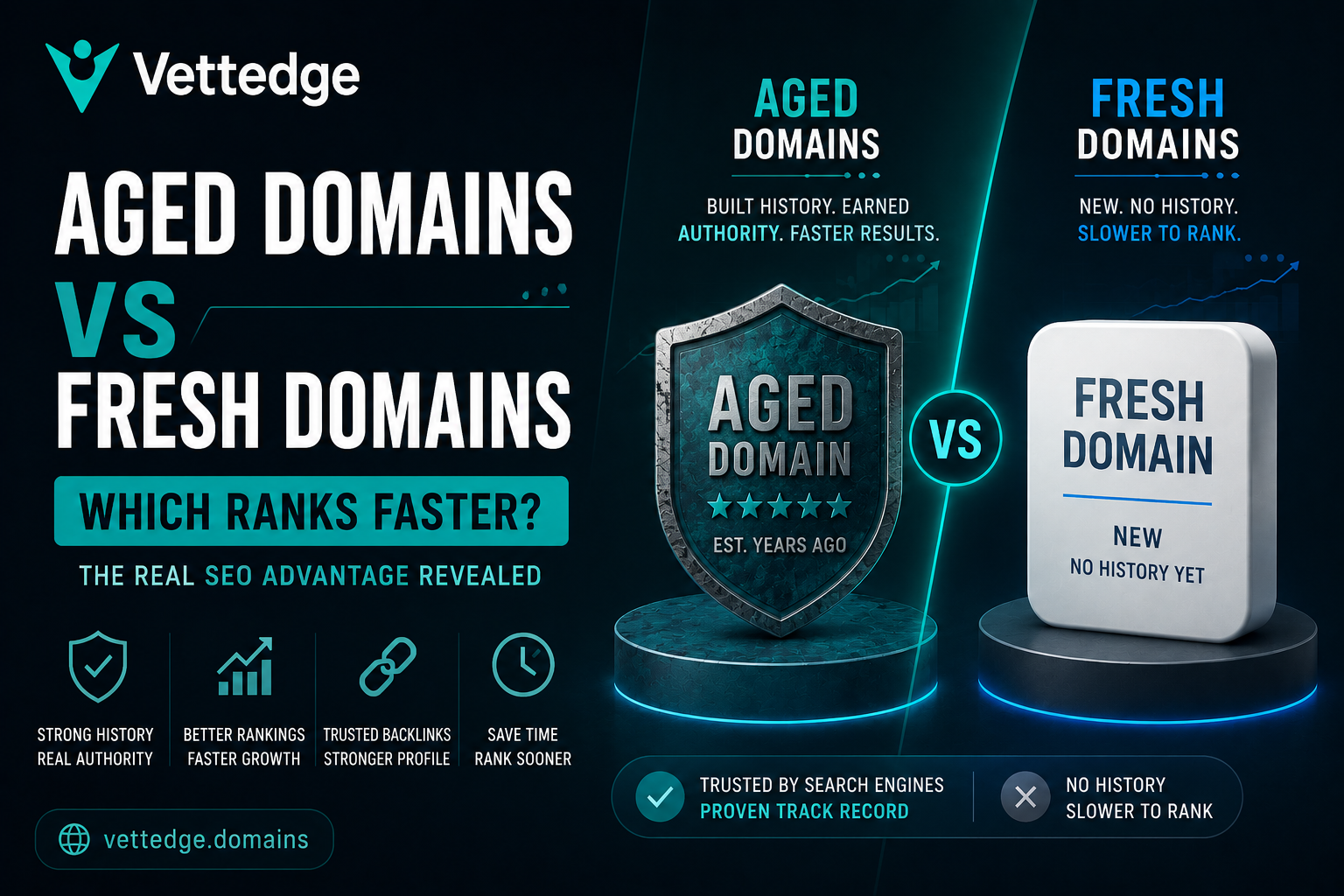
A domain that has existed for ten years may carry genuine authority, or it may come with a history of spam, manipulative SEO tactics, and poor-quality backlinks. On the other hand, a domain with fewer years behind it may offer a far cleaner foundation and stronger long-term potential. This is why we never evaluate domains based on age alone. Experience has taught us that real value comes from understanding the bigger picture.
Before any domain reaches our marketplace, we take time to understand its history, authority, risks, and future potential. We are not interested in listing domains simply to increase inventory. Instead, we believe every listing should offer genuine opportunity for serious buyers who want to build something meaningful. Whether someone plans to launch a brand, grow an affiliate business, build an authority website, or create a digital company, the right domain should feel like an advantage rather than an obstacle.
That philosophy shapes everything we do.
Why Vetting Matters More Than Most People Think
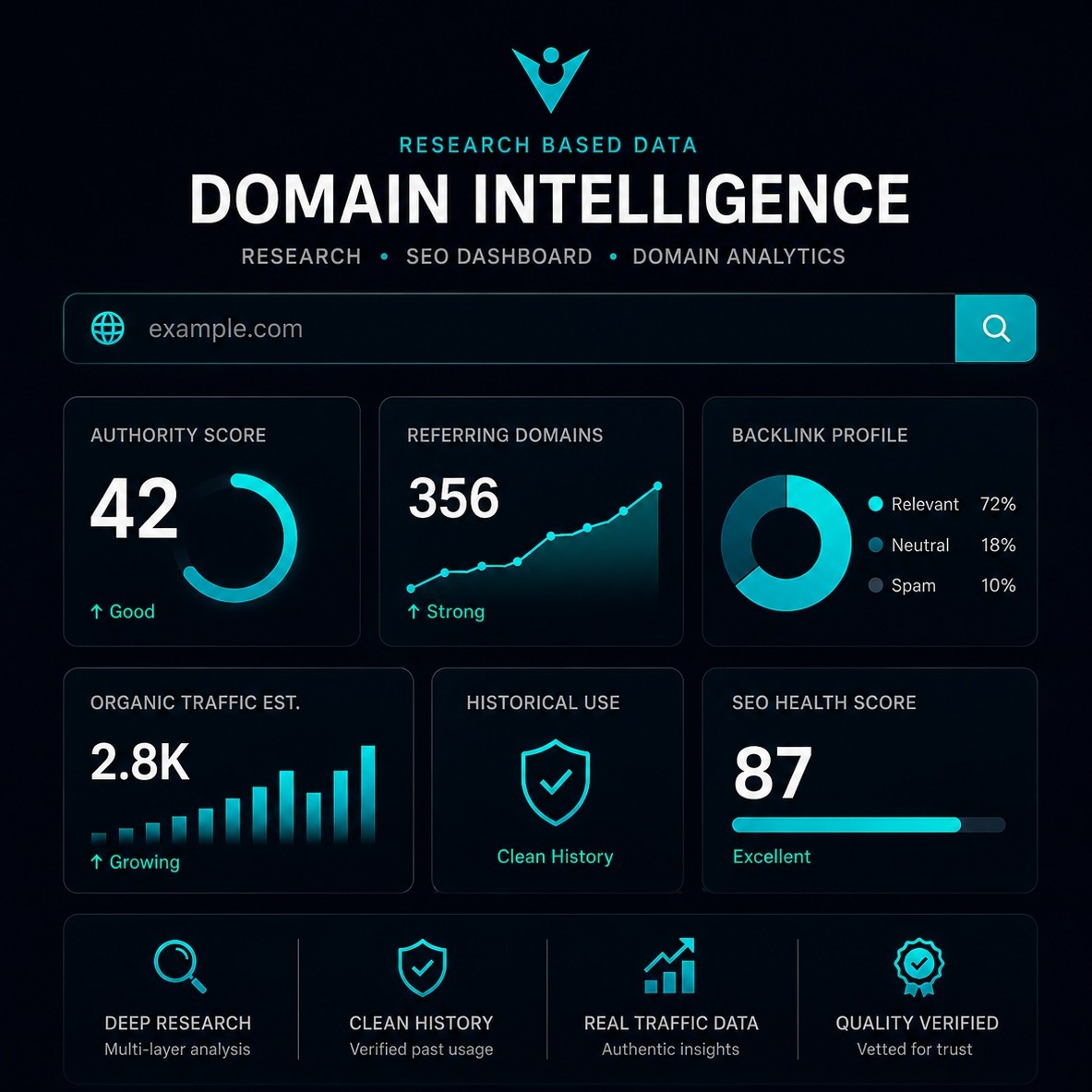
One of the biggest mistakes people make when buying aged domains is trusting surface-level metrics. A domain may appear attractive because it has thousands of backlinks, strong authority scores, or a long registration history. Yet numbers without context rarely tell the full story.
We have seen domains with impressive-looking statistics turn out to be poor investments because the authority was artificial, the backlinks were spam-heavy, or the historical usage created trust issues. At the same time, we have seen domains with more modest metrics become incredibly valuable because they carried clean signals, authentic history, and realistic growth potential.
That difference matters.
Anyone can collect random expired domains and call them premium, but real quality requires research. Buyers deserve confidence that a domain was reviewed carefully before it was listed. In an industry where shortcuts are common, proper vetting becomes one of the clearest signs of professionalism.
When someone invests in a domain, they are not simply purchasing a web address. They are investing in a digital foundation.
Why That Difference Matters
A strong domain can help accelerate growth, but only if the foundation is worth building on. A poor-quality domain may create setbacks that take months or even years to recover from. Spam signals, irrelevant authority, toxic backlinks, and questionable history often become problems that future owners inherit without realizing it.
That is exactly why we believe deeper evaluation matters more than flashy numbers.
Domain History Always Comes First
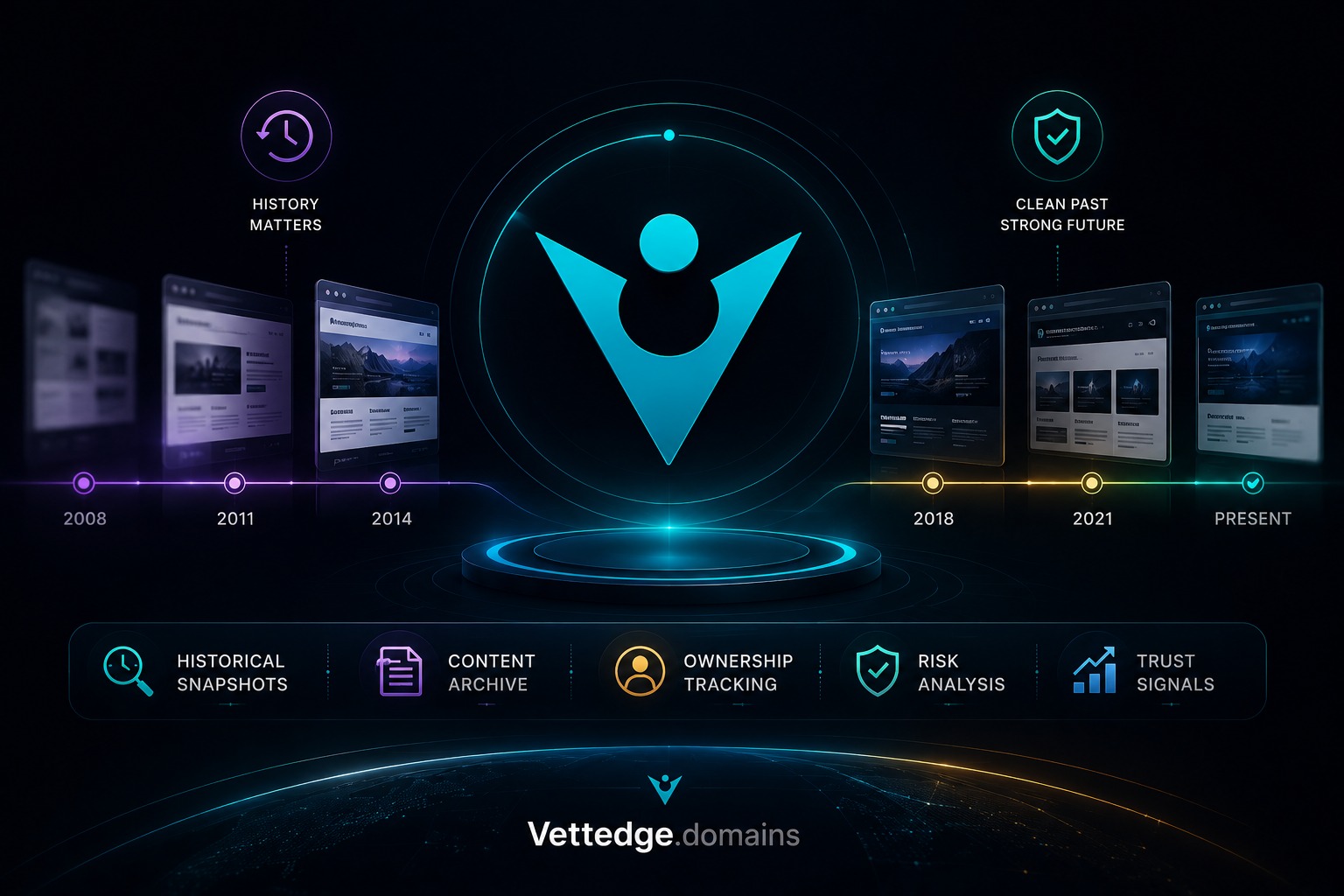
The first thing we evaluate before listing an aged domain is its historical background. In many situations, a domain’s previous life tells us far more than any metrics dashboard ever could.
We want to understand how the domain was actually used and whether its past creates opportunity or risk. A domain that previously hosted a real business, authority website, niche publication, or trusted platform often carries stronger credibility than one that changed ownership repeatedly or existed only to manipulate rankings.
Search engines pay attention to patterns.
Consistency matters because domains with stable histories generally carry more trust than domains that shifted directions every few months. If a domain has spent years supporting genuine content or meaningful activity, that tends to signal a stronger foundation.
At the same time, warning signs quickly attract our attention.
We ask questions such as:
- Was the domain connected to a real project?
- Did it provide meaningful content?
- Was it built for users rather than search manipulation?
- Did ownership constantly change?
- Was the niche history relevant and trustworthy?
Sometimes a domain that looks average on paper becomes highly valuable after historical review. Other times, a domain with impressive metrics quickly loses appeal once deeper investigation reveals concerns.
Trust Matters More Than Age
One thing experience has consistently shown us is that trust matters more than age alone. A clean five-year-old domain often holds more practical value than a ten-year-old domain carrying spam or manipulation risks.
Age can help, but trust is what creates long-term opportunity.
We Pay Close Attention to Backlink Quality
Backlinks remain one of the most misunderstood parts of domain evaluation. Many buyers focus almost entirely on quantity, assuming that thousands of backlinks automatically equal authority. Unfortunately, this assumption often leads people toward poor decisions.
More links do not always mean more value.
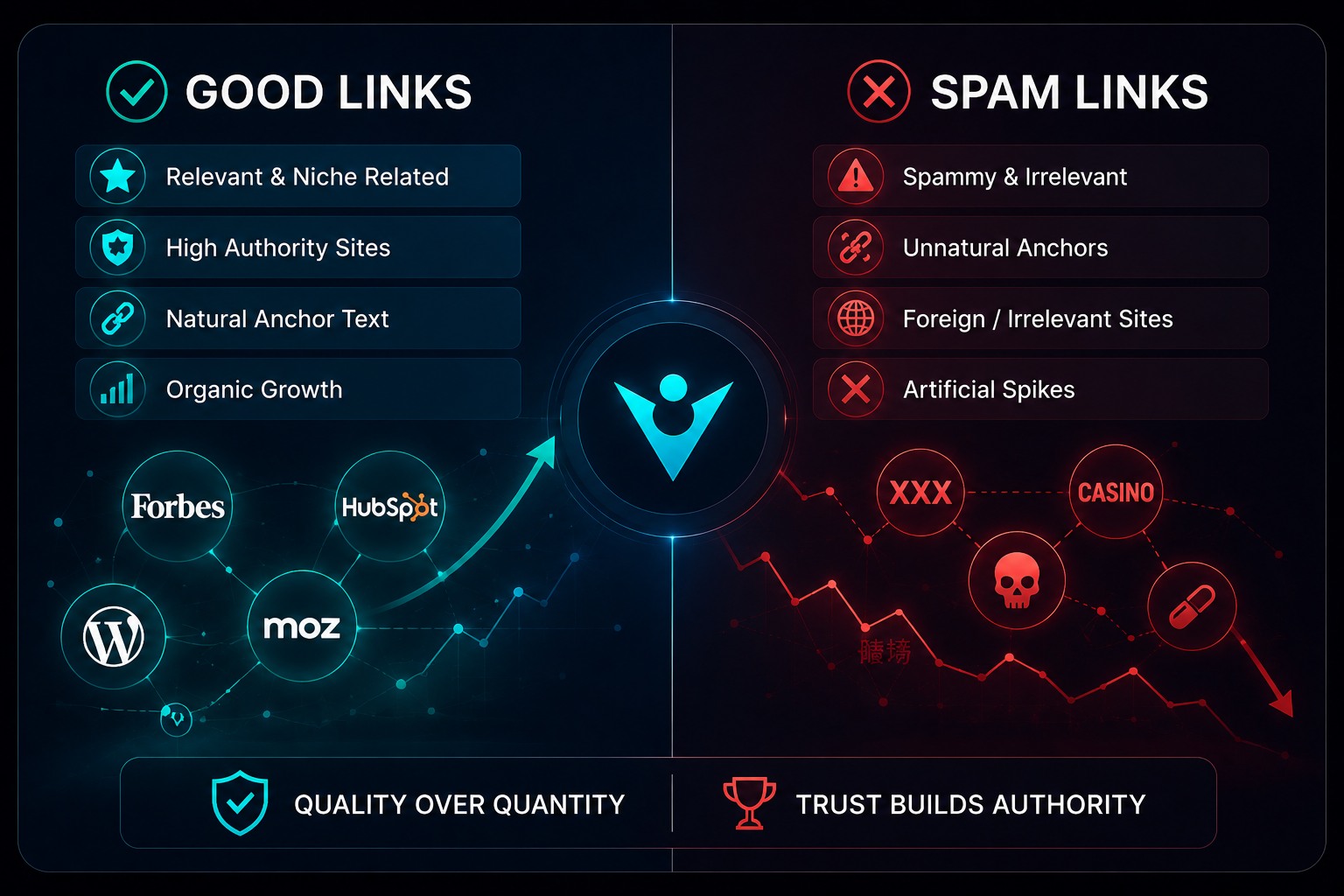
In many situations, a domain with fewer but stronger backlinks becomes significantly more valuable than one carrying large amounts of spam-heavy or manipulated links. What matters is how those links were earned and whether they reflect genuine trust.
Healthy backlink profiles tend to grow naturally over time. Editorial mentions, niche-related references, trusted citations, and organic brand mentions usually indicate stronger quality. When authority develops naturally, it tends to carry more lasting value.
At the same time, certain warning signs immediately raise concerns.
We look carefully for issues such as:
- Spam-heavy backlinks
- Unnatural anchor text
- Irrelevant niche links
- Suspicious foreign backlinks
- Link farm patterns
- Sudden artificial growth spikes
A backlink profile should tell a believable story.
If a domain suddenly gained thousands of questionable links within a short period or appears heavily manipulated, we investigate further. Long-term value comes from trust, not shortcuts.
Quality Matters More Than Quantity
This principle shapes how we evaluate backlinks.
A smaller profile built through authentic mentions often holds more real-world value than inflated numbers supported by low-quality links. Artificial authority may look impressive inside SEO tools, but lasting strength comes from credibility.
We care far more about quality than vanity metrics.
Relevance Still Plays a Major Role
One thing many people overlook when buying aged domains is topical relevance. A domain may have authority, but if its historical focus has nothing to do with future plans, some of that value becomes less meaningful.
For example, a domain previously associated with technology content may naturally align better with SaaS, AI, software, or digital businesses. Similarly, domains connected to travel, education, health, or finance often carry stronger contextual alignment within those industries. This does not mean a domain cannot evolve.
Rebranding happens all the time, and businesses regularly reposition themselves. However, when historical relevance aligns naturally with future direction, the transition often becomes smoother.
Search engines continue becoming more sophisticated when understanding context and topical relationships. Because of this, we always consider whether a domain realistically supports meaningful future use.
Why Relevance Matters
The strongest domains often feel natural. When authority, historical signals, and future goals align, the result tends to create stronger long-term opportunity. Relevance does not guarantee success, but it often improves the quality of the starting point.
That matters more than people realize.
Traffic Signals Matter, but Context Matters More
Traffic domains naturally attract attention, and understandably so. Existing visibility can create advantages, especially when historical traffic originated from genuine interest. However, not all traffic carries equal value.
A temporary spike from years ago may look exciting inside analytics, yet offer very little practical opportunity moving forward. On the other hand, a domain with stable historical visibility and authentic search activity may become highly attractive even without dramatic numbers.
We always look deeper than surface-level traffic.
Some of the things we review include:
- Historical visibility trends
- Search activity patterns
- Organic growth consistency
- Branded search signals
- Long-term sustainability
Consistency usually matters more than temporary momentum.
We prefer domains showing signs of genuine engagement rather than vanity traffic created by short-term popularity or manipulative tactics.
Sustainability Matters More Than Spikes
A domain should create realistic opportunity. We are far more interested in sustainable signals than temporary excitement. Flashy numbers may attract attention, but stable historical performance often carries greater value over time.
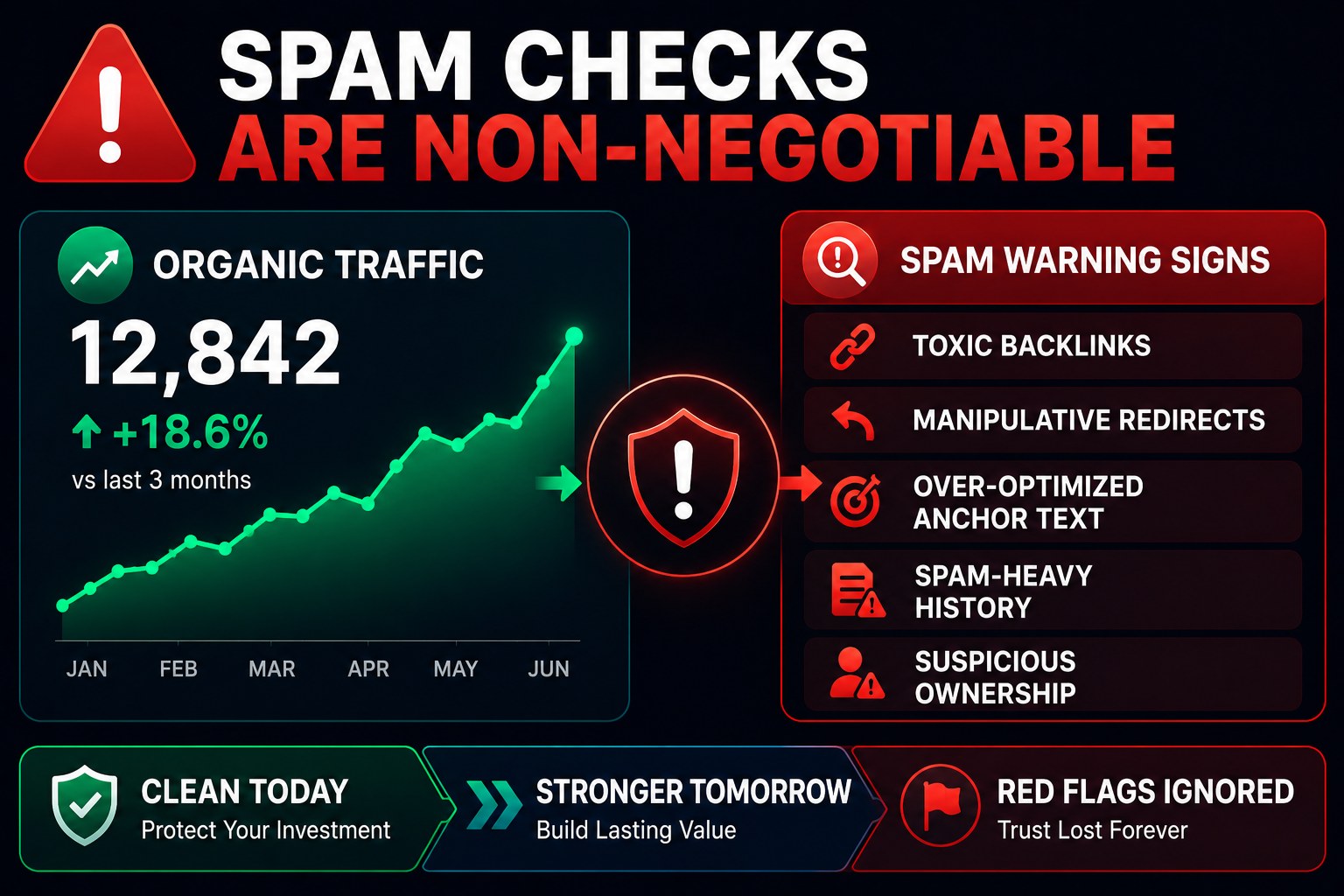
Spam Checks Are Non-Negotiable
No matter how attractive a domain looks initially, spam concerns immediately trigger deeper investigation. This is one area where shortcuts simply do not work.
Over the years, many domains have been abused through manipulative SEO campaigns, low-quality content farms, gambling spam, malware issues, and aggressive redirect strategies. Unfortunately, future buyers sometimes inherit those problems without realizing it.
That risk matters.
We actively review domains for warning signs because rebuilding trust takes far more effort than protecting it from the start.
Some red flags include:
- Toxic backlink patterns
- Manipulative redirects
- Over-optimized anchor text
- Spam-heavy niche history
- Low-quality content abuse
- Suspicious ownership behavior
Why Risk Matters More Than Surface Metrics
A domain may appear powerful on paper while hiding problems underneath. We would rather reject questionable opportunities than compromise quality standards.
Strong metrics lose meaning when trust becomes questionable. For us, protecting long-term value always matters more than short-term hype.
Branding Potential Always Matters
Numbers alone do not build memorable businesses. A strong domain should feel credible, easy to remember, and practical for long-term growth. This is why branding potential plays an important role in how we evaluate domains.
We think carefully about how a domain sounds, how memorable it feels, and whether it realistically supports future expansion.
Some simple questions guide this process:
- Is it easy to pronounce?
- Is it memorable?
- Does it feel trustworthy?
- Can a business confidently build around it?
- Does it leave room for growth?
The strongest domains usually feel simple, credible, and flexible enough to grow alongside a brand.
Strong Brands Start With Strong Foundations
A domain should not create friction. If people struggle to remember it, spell it, or trust it, growth becomes harder. Strong branding often begins with choosing the right foundation. That foundation matters.
Final Thoughts
Buying an aged domain should feel like gaining momentum, not inheriting hidden problems. While age certainly has value, meaningful opportunity comes from much more than years alone. Trust, relevance, backlink quality, historical credibility, traffic sustainability, and branding potential all play an important role in determining whether a domain deserves serious attention.
Before listing any domain, we believe in taking the time to evaluate what actually matters. We care about realistic opportunity, not inflated promises. Buyers deserve better than vanity metrics and surface-level numbers. They deserve confidence that real thought, experience, and professional standards shaped the listing process.
In an industry filled with shortcuts, quality still matters. That is why we focus on strong foundations, careful research, and long-term value before any domain earns a place in our marketplace.